
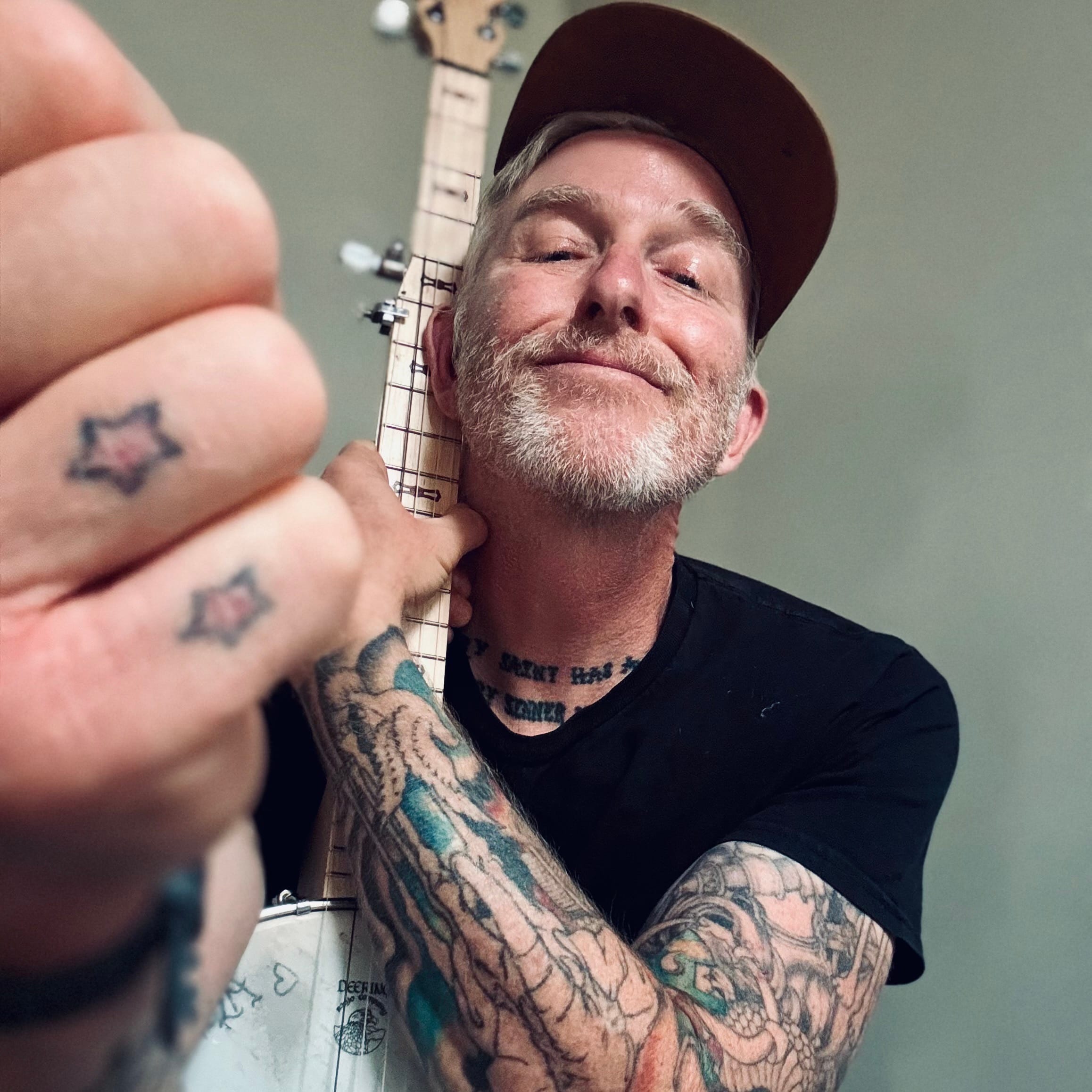
Editor’s Note: Kevin Blackwell is best known in the music scene as a songwriter and frontman of the group Sassparilla, a band with eight albums in its discography, beginning with a 2007 release and most recently releasing an album in 2020. From their upcoming album’s press release, “After a long pause, Portland-and Colorado-based Americana grit, punk energy, and back-porch soul band Sassparilla returns with Honey, I’m Using Again – a haunting, home-recorded collection that explores addiction, loss, and survival with striking honesty. The album will be released on February 20, 2026.”
“Written and produced by Kevin Blackwell in his basement in Golden, Colorado, Honey, I’m Using Again distills the raw emotional force that’s defined Sassparilla since their Portland barroom days. The title track frames relapse as a kind of human confession – a metaphor for any pattern of self-destruction we can’t quite shake.”
Blackwell noted, “‘I imagined what it would be like if we could be that honest with someone about our ‘thing.’ ‘To say, ‘Honey, I’m using again,’ and mean it.” He added, “I wanted to strip the songs to their bones. Every line, every sound had to serve the emotion – no filler, no flash.”
At SWT, we love the verbiage and emotion within that. We dig it and will gladly advocate for it. So we’re happy to share this gratitude-filled writing from Kevin Blackwell with you as another essay within our Artist Essay series.

The Chicago punk scene was vibrant when I was coming up. Rights of the Accused, Naked Raygun, and the skate shop I hung out in created a safe corner of the world. There was a community public radio station that had a punk show for an hour every day after school. And there was the local fanzine. I don’t remember its name, but I remember the experience well.
Long before social media algorithms decided what we “might like,” there were these fanzines—scrappy, photocopied, self-published booklets made by the community for the community. These handmade publications didn’t just report on underground music scenes; they created them. Fanzines connected geographically scattered listeners, documented local bands before they had records, and championed the edges of culture that mainstream press ignored. They were stitched together with glue sticks, typewriters, and passion. Their purpose wasn’t profit or prestige—it was participation.
While the physical form of fanzines may have faded, their spirit absolutely hasn’t. Today’s music blogs, Substack writers, and niche reviewers carry the torch. The platform has changed, but the ethos remains: find the overlooked, listen deeply, and champion the art that matters even when it’s made in someone’s bedroom on a shoestring budget.
The best of today’s independent music writers serve a similar role to 1980s Chicago zine editors or Pacific Northwest punk documentarians. They create digital pockets of community where lesser-known acts are treated with the same seriousness one might reserve for the canonized. They write in first person, take risks, and invest emotional labor into artists who may never appear on a chart or sell more than 100 records. Their reviews and think-pieces act as modern-day dispatches from the margins, often circulating farther than any xeroxed zine ever could, but with the same hand-rolled authenticity.
Just as DIY publishers once carved out space outside the major magazines, online writers carve out space beyond streaming platforms’ editorial playlists and corporate music journalism.
Parallel to the rebirth of DIY music writing is a renaissance in DIY music making. The rise of accessible digital audio workstations—Logic, GarageBand, Ableton, Reaper—has democratized music creation in a way that mirrors old folk traditions. You no longer need a studio, engineer, or expensive equipment to make a record; you just need a laptop, an idea, and a whole lot of heart.
In a strange but poetic way, today’s laptop musicians resemble the artists documented by Alan Lomax throughout the 20th century. Lomax sought music made by everyday people—songs created outside commercial industry, passed through communities, shaped by lived experience. He championed authenticity over polish, proximity over perfection, expression over spectacle.
That same spirit is alive in bedrooms, basements, and small apartments today. A singer tracking vocals through a budget USB mic, a beatmaker chopping sample packs, a songwriter layering harmonies in a DAW—they’re participating in a form of new folk culture. Their tools are digital, but the ethos is older than radio. Like folk musicians, they use what they have, make what they feel, and share it with whatever community will listen.
And just as Lomax traveled with a recorder to capture the unheard voices of America, today’s bloggers, podcasters, and digital curators roam the internet with metaphorical field recorders—finding the quiet artists, the regional scenes, the self-released EPs that might otherwise disappear into the noise. The technology is different, but the mission rhymes across generations: preserve the overlooked, amplify the honest, and celebrate the cultural value of amateur creation.
The relationship between modern music bloggers and DIY musicians forms a feedback loop that feels profoundly folk-like. Both rely on personal networks. Both value expression over profit. Both create culture from the ground up. Together, they form an ecosystem where small acts can flourish—where algorithmic indifference is offset by human enthusiasm.
Fanzines once documented punk scenes and garage bands; blogs and micro-writers now document Independent and DIY producers and genre-blurring experimenters. Tape hiss has become bit-crush; coffee-shop interviews have become DM conversations; xeroxed pages have become RSS feeds and Substack posts. But the soul of the thing—the community-driven desire to celebrate art made at the margins—remains intact.
In this sense, the internet hasn’t killed the fanzine. It has multiplied it. It has turned every passionate listener into a potential publisher. It has turned every bedroom into a potential studio. And it has brought the ethos of folk culture—raw, immediate, communal—into the realm of digital music-making.
The tools have changed, but the impulse hasn’t: people still want to make their own music, and others still want to write about it. That old Lomax vibe of capturing ordinary people making extraordinary art continues, echoing through DAWs, blogs, playlists, and tiny online circles where passion matters far more than popularity.
So I say thank you to Scummy Water Tower and all of the writers that take a chance and give acts like us a chance. I say thank you to our manager, Alex Steininger, who has championed so many important Portland artists that may never have seen the light of day. And I thank all the digital crate diggers that give us a listen. Thank you from the bottom of our hearts.
You can follow Sassparilla on Facebook, visit their website, listen to some of their music on their Bandcamp page, and watch more of their albums as part of a YouTube topic. And check back with SWT in February for even more Sassparilla content.


Kevin Blackwell
Contributor
Kevin Blackwell performs with Portland-and-Colorado-based Americana, punk, and soul band Sassparilla