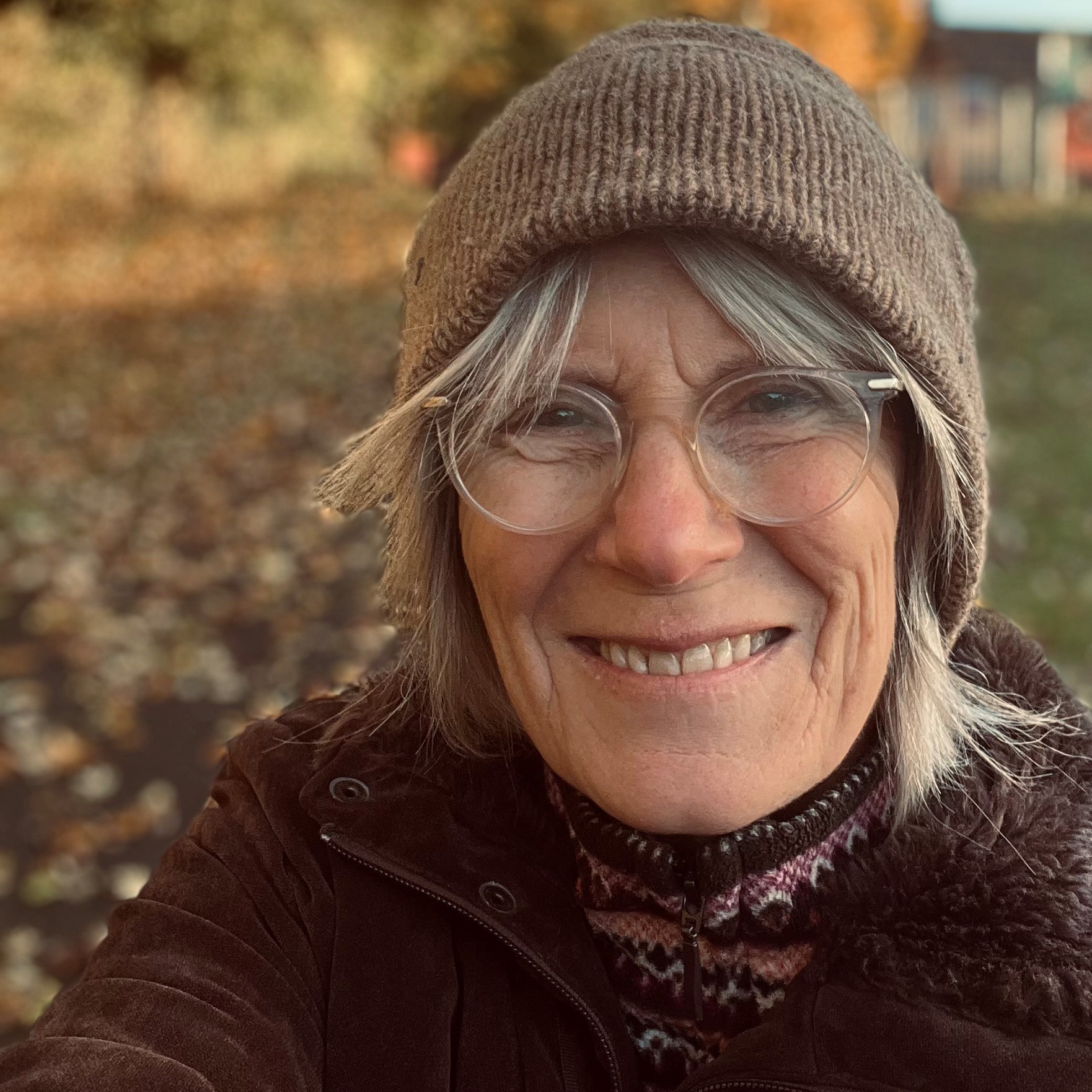
Editor’s Note: Gitika Partington is a singer, songwriter, choral director and song arranger based in the UK. On January 30th, she released an enormous output of music – thirteen albums, to be exact. Setting out to break the world record for most albums released in a day wasn’t her goal.
In total, the Twelvefold albums feature 130 original songs Partington wrote and recorded between 2020 and 2025, as part of what a press release describes as a “sustained songwriting practice rather than a commercial release cycle.” Each song were created during her participation in the the I Heart Songwriting Club community. According to the press release, “each week a word came through as the weekly prompt. The club based in Brisbane, Australia, has mostly Australian songwriters who Gitika has been ‘virtually’ hanging out with for the last 5 years.”

You can stream the albums on her Bandcamp page and Spotify.
Below, Partington describes in an exclusive Artist Essay for SWT what prompted her to release thirteen albums at once.
I made my first album when I was six.
My mum and dad recorded it around the dining room table, with me and my two younger siblings drafted in. We sang “Go Tell Aunt Rhody” while a nice man captured it on a Revox tape machine through a very fancy microphone hanging from the ceiling. It came out on vinyl. Limited run. No strategy. No rollout.
I did not know it then, but I was learning something I have never unlearned. Music can be made anywhere. Art does not need ideal conditions, industry approval, or a man with a lanyard announcing that now is your moment.
That got into my bones early.
Since then I have recorded in kitchens, bedrooms, garages and, now and then, in swanky studios with excellent catering. I like tape machines, hard drives, and anything with a record button. As someone with dyslexia and a cranky short-term memory, I do not wait for ideas to line up politely. I catch them. I sing into machines. I play them back. Recording is how I think, remember, and discover what I mean.
I have made much of my living writing for choirs and community singing projects. Those songs have travelled. They have been sung in school halls, churches, community centres, and sometimes somewhere grand. But alongside that visible strand has run something more private. The steady, prolific practice of simply being a songwriter.
I wear a badge on my jacket that says I AM A SONGWRITER. Sometimes someone sees it and shrieks with joy. The girl in my local food shop did today. I love that. Not because it is branding, but because it names something people still respond to instinctively. Songwriter. For me it suggests making something from nothing. Devotion. Mischief. Craft. Nerve.
Most of my musical life has been collaborative, which teaches you quickly that songs do not belong to you in the neat, possessive way people imagine. They pass through. They gather fingerprints. They get altered by being sung, heard, repeated and loved. I have never been very interested in songs as precious little objects. They are meant to be used. As long as you are not used in the process.
I have also spent enough years around music to know that when men are prolific it is often called visionary, ambitious, driven. When women are prolific it can be treated as messy, indulgent, excessive, slightly embarrassing, as though they have failed to edit themselves down into something more acceptable. I have no interest in making myself smaller to suit that lens.
So yes, I released 13 albums in one day.
Not because I set out to make a grand stunt of it. In July 2020, during the pandemic, I joined an online Australian songwriting group and began writing one song a week. Fast. Without too much agonising. Without waiting for brilliance to descend in a tasteful shaft of light.
That rhythm changed me.

When the world felt unstable, songwriting became something solid to stand on. Every week there was a prompt, a deadline, a song. Not a masterpiece. Not a product. A song. Writing quickly stripped away a lot of vanity. I stopped worrying so much about whether each piece was important enough or polished enough.
Over time, the songs piled up. Then one day I realised I was sitting on a body of work so large that pretending it was not there had become ridiculous.
And the work itself is not narrow. Across these albums I move through lo-fi bedroom pop, folk-rooted songs, electronic textures, acoustic intimacy, banks of voices, and whatever else seemed necessary at the time. Much of the music carries the warmth of my folk-rooted pop sensibility, but it rarely stays obediently in one place. What ties it together is not genre discipline but voice. Earthy, expressive, human, and curious enough to keep reaching for new branches.
The 13 albums were not a gimmick. They were the most truthful way I could release work that had been written as an ongoing stream rather than as neatly separated statements. These albums belong together. They are chronological. Side by side, they form one long conversation.
Releasing them one by one would have told the wrong story, as though each one were a separate campaign. They are not campaigns. They are chapters. And yes, there is also something deeply satisfying about doing this in a culture obsessed with the drip-feed. One single, then another single, then another morsel for the algorithm. I understand that game. But I also reserve the right to say not this time.
Another part of the project matters just as much to me. I have put out a call for people to handwrite lyrics for a book of all 130 songs, one handwritten lyric at a time. Not just people with beautiful calligraphy either. I want all sorts of handwriting. After all the files, folders, exports and metadata, I want the songs to return to paper, to ink, to other people’s hands. Back to something physical. Back to being shared.
Sometimes the sanest thing you can do is the thing that looks unruly from the outside.
The songs had been with me long enough. I love them, but they were crowding the room. So I let them out. Altogether.
Some will vanish quietly. Some may land exactly where they need to. Some might travel far beyond me. That is the magic. My job was to make them, finish them, and release them as they were.
And today I will still sit down with a keyboard, a fancy microphone, and a new blank space, and begin again.
That is the real story. The practice. The refusal to wait for permission.
Art is not meant to sit quietly on a hard drive behaving itself.
Sometimes you just have to open the windows and let the songs out.

Gitika Partington
Contributor
Gitika Partington is a singer, songwriter, choral director and song arranger based in the UK