

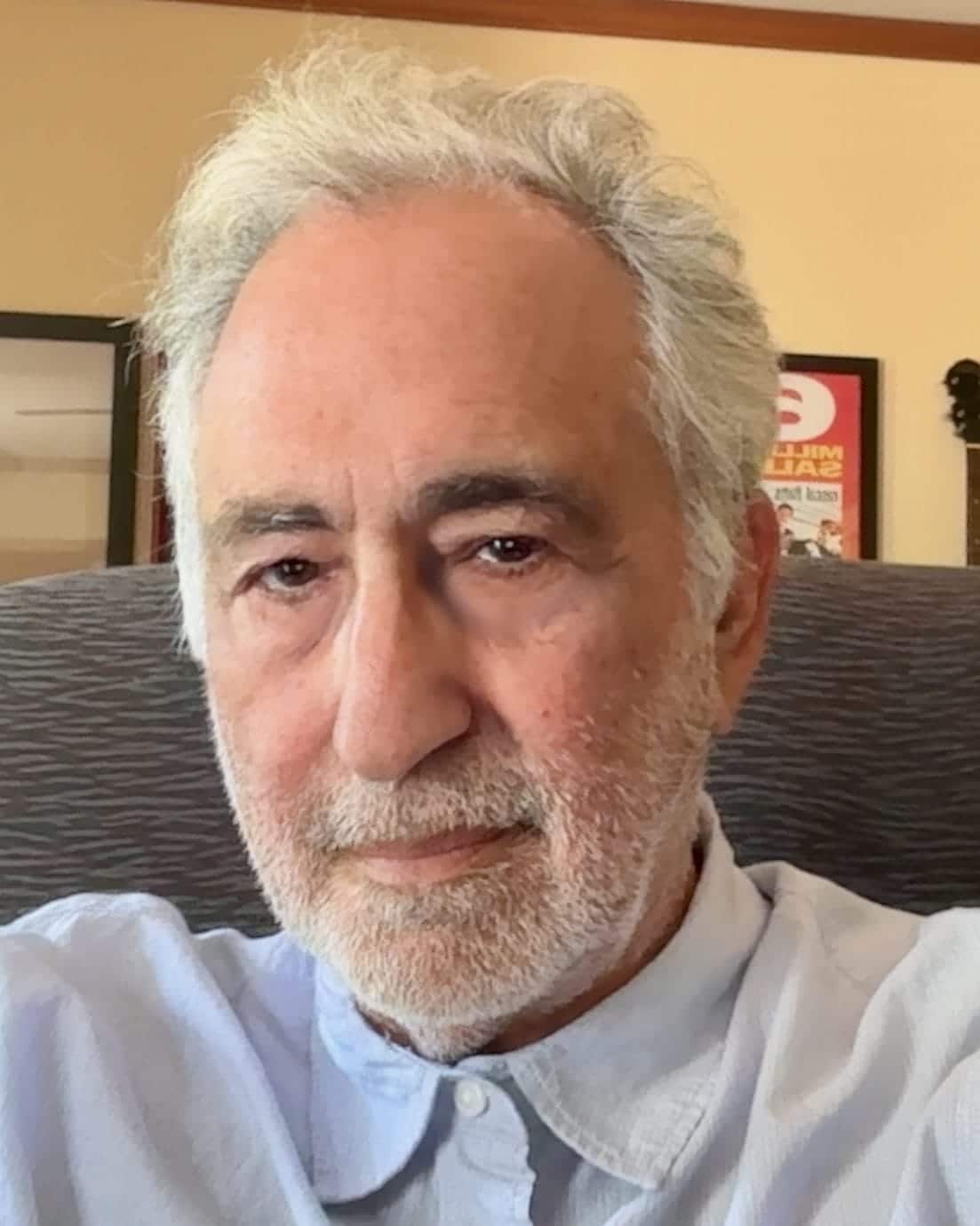
Editor’s Note Eddie Schwartz is a legendary, award-winning Canadian songwriter, singer, guitarist, producer, member of the Order of Canada (awarded in 2012), and human and music rights advocate, serving as President of the Board of SOCAN and as President and President Emeritus of the Songwriters Association of Canada, President of the Canadian Songwriters Hall of Fame, and North American President of the International Council of Music Creators (CIAM) and a former president and current board member of the non-profit fixated at an ethical, sustainable and transparment music ecosystem Fair Trade Music.
But to many music fans, he’s perhaps best known as the songwriter behind Pat Benatar’s Billboard Top 10 hit “Hit Me With Your Best Shot”, which won Schwartz the JUNO award for Composer of the Year. Schwartz truly was an extremely prolific songwriter in the ’80s, writing or co-writing countless other classics that have been recorded by Carly Simon (“Tonight And Forever” co-written with Simon), Billboard Top 10 hits by The Doobie Brothers (“The Doctor”), and Paul Carrack (“Don’t Shed a Tear”). We can’t leave out Joe Cocker (“All Our Tomorrows” co-written with David Tyson), Donna Summer (“Fascination”) and Jeffrey Osborne (“Room with a View”). The impressive list and accolades go on and on. Schwartz also released four solo albums that found some success and airplay in Canada and the US at the time, beginning with the self-titled Schwartz (1980), No Refuge (1981), and Public Life (1984). Those albums produced several Billboard-charting songs in the US that reached even higher within Canada, including “Does a Fool Ever Learn”, “Over the Line”, “Special Girl’ and “All Our Tomorrows”. 11 years later, after releasing Public Life, Schwartz released his last solo album, Tour de Schwartz (1995). And 30 years later, on November 12, he released his own EP, Film School.
He turned to songwriting as a way, according to the Film School EP press release, “to make sense of today’s world and rediscover the part of himself that music built in the first place.”
“The result is six deeply personal songs that play out like little films – stories of resilience, reflection, and, sometimes, escape,” the press release continues.
Schwartz has also spent the past several years as a major force in creator advocacy, leading the International Council of Music Creators (CIAM) through, according to the press release, “some of the most turbulent times for songwriters in the digital age.”
“Between his reflections on AI in music, the changing industry, and his personal rediscovery of songwriting as a lifeline, Film School feels like a perfect bridge between eras – and a reminder of why the craft still matters,” states the press release.
Below, Schwartz pens an exclusive essay for SWT about how a recent emotional trip to Soweto, South Africa, altered his view of himself as an artist.
I’ve just returned from a trip to Johannesburg, South Africa. I was there primarily for the annual General Assembly of a music creator organization called the International Council of Music Creators (CIAM), but having some free time on my hands, I used it to visit Soweto, the township where many of the leaders of the anti-apartheid movement lived, and the area where some of the horrific events that characterized that long struggle for freedom and equality took place.

As I visited the small home of Winnie and Nelson Mandela and their children, and then walked through the area to the nearby Apartheid Museum, I was very fortunate to have the companionship of a remarkable gentleman, Nxolisi, who lived nearby, and who shared his insight into the events that led to the end of that oppressive regime.
Among leaders of the movement, he spoke about the role of Steven Biko, and later, I read Mr. Biko’s words at the museum. I found them very moving and insightful in regard to how those on the “wrong” side of an overwhelming power imbalance must recalibrate how they see themselves:
“The most potent weapon of the oppressor is the mind of the oppressed.”
It’s a powerful statement, and one that spoke to me in a very personal way about the role I play, or can play, in the world I find myself in at this moment. As a songwriter and artist, it made me think about the role music plays, or can play at times when we may need to stand up and be counted.

I grew up in a household where the songs of Woody Guthrie and Pete Seeger were often in the air, declaring the power vested in all people – “the common folk” – not those who would force their will upon us.
Steven Biko, and yes, Woody Guthrie and Pete Seeger, were up against challenges much harsher and more difficult than anything I have experienced in my life. But given current circumstances, it strikes me as entirely appropriate to be thinking about what it will take to get us to a better place, both at home and around the world.
Bending the arc of history toward justice has always been a long game, and that’s not going to change any time soon. Empowering ourselves to stand up for the dignity and rights of all people, with decency and compassion for all, will be necessary, and I humbly submit that music can play an important role in fortifying, uniting and inspiring us on the journey as it has in the past, and most certainly can now and in the future.
In my mind’s eye, I see a campfire, and standing there are two people, Woodie Guthrie with his “This Machine Kills Fascists” guitar, and Steven Biko.
They’re passionately singing together about two places a world apart, South Africa and America – yet in some ways much closer –
“This land is your land, this land is my land, this land was made for you and me.”

Eddie Schwartz
Contributor
Eddie is a legendary award-winning Canadian songwriter, producer, and rights advocate. He's perhaps best known as the songwriter behind Pat Benatar’s “Hit Me With Your Best Shot” and countless other classics that have been recorded by Carly Simon, The Doobie Brothers, and Joe Cocker. Schwartz has also spent the past several years as a major force in creator advocacy, leading the International Council of Music Creators (CIAM).